

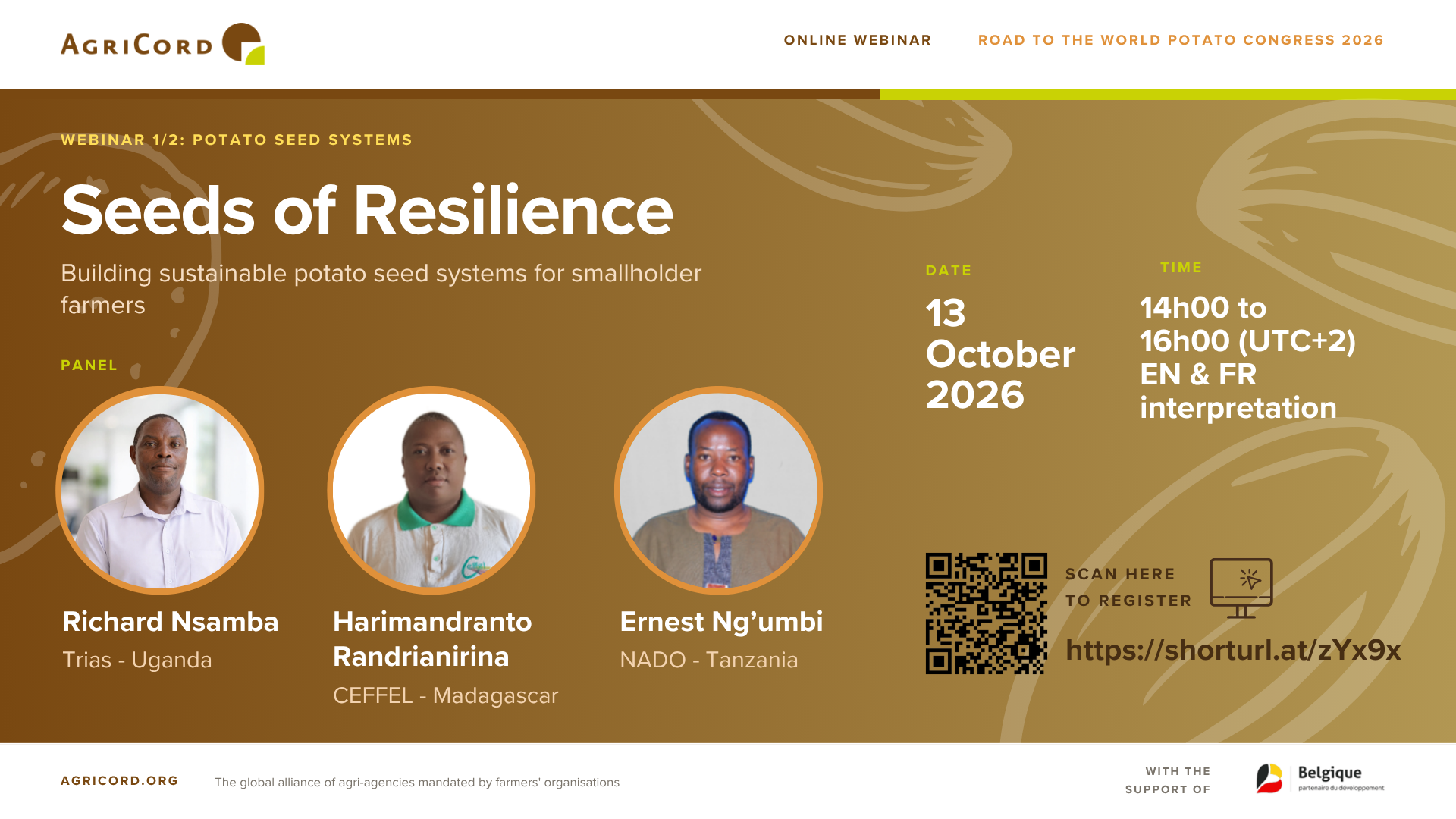
How can potato seed systems give smallholder farmers reliable, affordable and timely access to quality planting material? Ahead of the World Potato Congress in Kenya, this webinar brings together farmers' organisations and their partners to share what works on the ground.
Potato is a vital food and cash crop for millions of smallholder farmers, yet good harvests depend on good seed. Formal systems often cannot supply certified seed at prices and places smallholders can reach, while farmer-managed and informal channels face degeneration and seed-borne disease. Distance, high costs, weak distribution and limited information narrow farmers' choices further.
Building sustainable seed systems takes more than producing more certified seed. It means connecting seed channels, strengthening local multiplication and quality assurance, and responding to what farmers actually need. Farmers' organisations are well placed to do this: they aggregate demand, support decentralised seed production and link farmers with research, public authorities and the private sector.
Questions on the table
- The obstacles. What stops smallholders from getting quality seed, and how do availability, cost, timing, distance and quality affect farmers differently?
- The farmer's view. What does a sustainable seed system look like, and how do we balance quality assurance, affordability and local access?
- Working together. How can formal and farmer-managed systems keep seed healthy without standards or costs that exclude smallholders?
- Going to scale. Which investments, policies and partnerships make sustainable seed systems viable in the long term?
This is the first of two webinars on potato seed systems. Lessons from the discussion will feed into the conversations at the World Potato Congress 2026.